

Three Boards, One Corridor, and a Bottle of the Wrong Cleaner
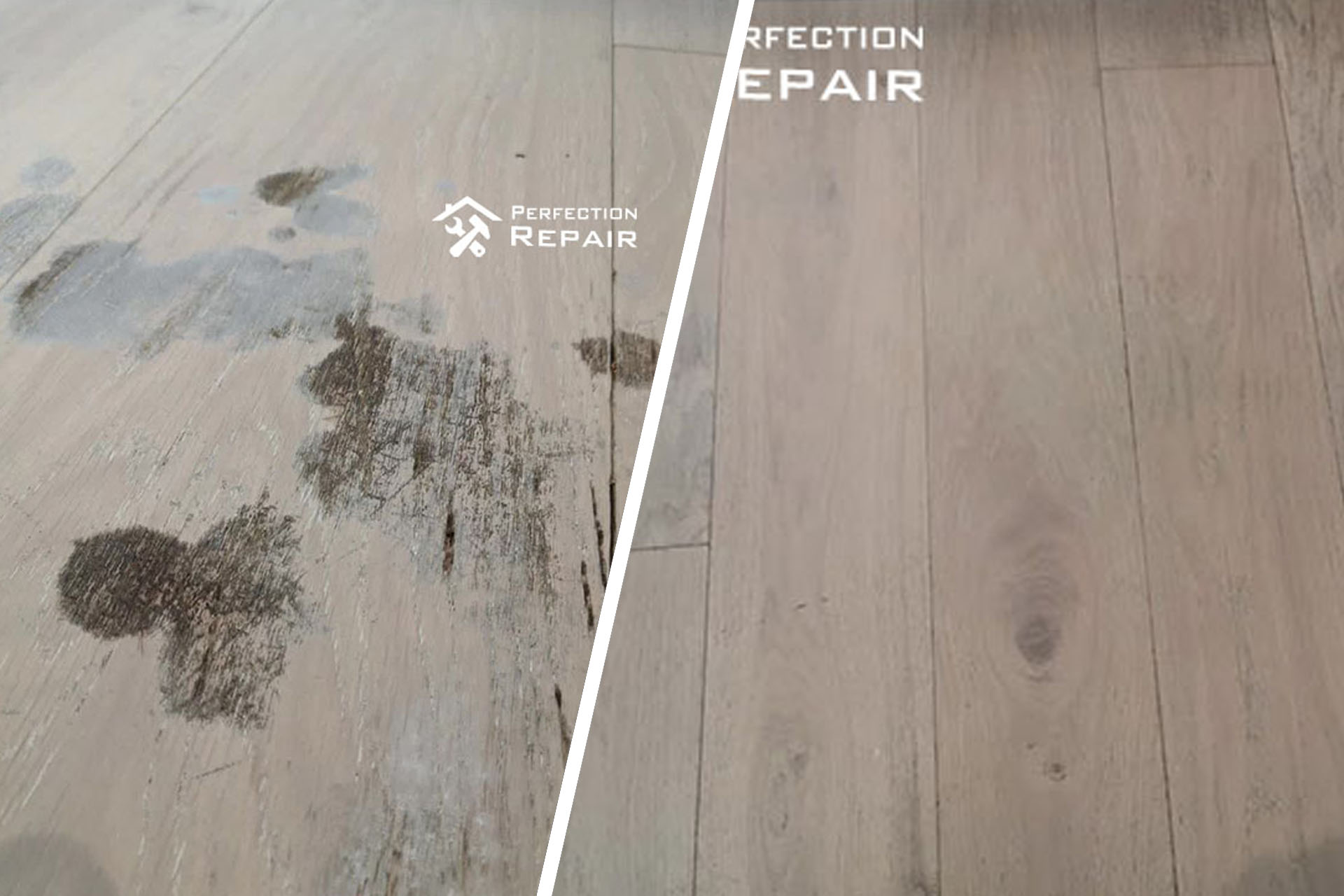
The client in Rhodes had used a heavy-duty cleaning product on their timber floor — the kind designed for tiles, not lacquered wood. The result was immediate: a cloudy, dull patch across three boards in the hallway, roughly where you step every time you walk between the living room and the kitchen.
They’d tried buffing it out. It didn’t help. The chemical had already reacted with the lacquer, breaking down the protective layer and leaving the finish permanently compromised. The timber itself was fine. The surface was not.
Their concern, reasonably, was that fixing it would mean sanding the entire floor — days of disruption, furniture moved out, the apartment uninhabitable. We assessed the job and gave them a different answer.
Why Localised Repair Was the Right Call
The damage stopped at the lacquer. There was no staining in the timber grain, no structural movement, no moisture ingress. That’s the diagnosis that determines the approach.
When finish damage is genuinely confined to the coating layer, there is no reason to touch the boards beneath — or the rest of the floor. The repair becomes a strip-and-recoat on the affected area only: remove the compromised lacquer, prepare the surface, and lay down a new finish that matches what’s around it.
The difficulty is in that last part. This floor had a semi-gloss finish with a specific grain texture profile — not a standard product you can pull off the shelf. We mixed a custom coating on-site, applied it in controlled passes, and checked the sheen level under raking light at each stage. The goal is a result where you can’t find the repair line by looking, by crouching, or by running a hand across the boards.
The entire process — assessment, masking, lacquer removal, recoat, and final inspection — took four hours.
What the Client Saw When We Finished
They walked the hallway and couldn’t identify which three boards we had worked on.
That’s not a dramatic claim. It’s what localised restoration is supposed to achieve when the damage is correctly assessed and the finish is properly matched. The boards that had been cloudy and dull that morning looked the same as every other board in the corridor.
The client had cleared the week expecting a full-floor job. They had their apartment back the same afternoon.
If you have localised floor damage in Sydney — chemical spills, impact marks, worn patches, or finish lifting — the first question is whether the timber is affected or just the coating. That assessment is what determines whether you need a targeted repair or something more involved. We will tell you which one applies before any work starts.
Workflow

Damage Assessment
Before touching the floor, we spent time understanding exactly what had happened. The cleaning agent had reacted with the lacquer coating, lifting and clouding it across three boards in a high-traffic corridor. The timber underneath was intact — the damage was confined to the finish layer. That assessment changed everything about the approach: no sanding, no board replacement, no disruption to the rest of the floor.

Localised Lacquer Removal
We stripped the compromised lacquer from the affected boards only, using a controlled chemical process that removed the damaged coating without cutting into the timber surface. The surrounding boards were masked and left untouched. This step requires precision — go too far and you affect the wood grain; stop too early and the new coat won't bond cleanly.

Gloss and Texture Matching
The existing floor had a semi-gloss finish with visible grain texture — not a standard off-the-shelf spec. We matched the sheen level and grain profile using a custom-blended coating, applied in stages and checked under raking light at each pass. The repaired section was indistinguishable from the boards immediately beside it before we packed up.