


What Causes Gaps and Squeaks in Timber Floors
Both problems come from the same source: timber moves.
Every floorboard expands slightly when humidity is high and contracts when it drops. Over years of Sydney summers and winters, that cycling adds up. Boards that were once tight begin to separate. Nails that were once snug work slightly loose. The result is gaps you can see and squeaks you can hear.
Neither problem means the floor is failing. They are normal characteristics of a timber floor that has been through a few decades of use. They can also both be fixed without replacing the floor or lifting a single board in most cases.
Gap Filling {#gap-filling}
The gap-filling material matters more than most people realise. A rigid filler — the kind sold in small tubes at hardware stores — does not flex with the timber. It bonds to one board, the other board moves away from it seasonally, and within a year the filler has cracked or popped out.
We use elasticised polymer compounds mixed on-site to match your floor colour. These materials bond to both board edges and remain flexible enough to compress and stretch as the timber moves through the seasons. For wide gaps, we sometimes use a rope backing first to give the filler something to bear against.
The result is a sealed floor that stays sealed. As a side effect, closing the gaps also removes the dust traps that make timber floors in older homes difficult to keep clean, and reduces the cold air that comes up through the subfloor in winter.
Squeak and Creak Repair {#squeak-repair}
A squeak happens when two surfaces rub against each other under load. The common causes are boards rubbing against adjacent boards, boards rubbing against the joists below, or nails that have worked loose and are moving in their holes.
We locate the exact source before doing anything. Walking the floor with the homeowner, testing specific boards, and checking whether the noise changes with weather or load tells us what we are dealing with.
For board-to-board friction, we inject a dry lubricant between the boards at the squeak point. For joist friction, we can access the gap between boards to treat the contact point. For loose nails or fixings, we re-secure from above using discreet fasteners that sit flush with the surface and are filled to match.
The vast majority of squeaks can be silenced in a single visit without lifting any boards.
Draught Proofing Older Floors {#draught-proofing}
Sydney’s older suburbs — Paddington, Surry Hills, Mosman, Glebe, Newtown — are full of homes built on timber stumps with an open subfloor. In these houses, gaps between floorboards connect directly to outside air. In winter that means cold draughts rising through the floor, particularly in rooms on the south side of the house.
Sealing the gaps reduces that infiltration. Combined with insulation in the subfloor cavity, it can make a meaningful difference to how the house feels in winter and how hard the heating has to work.
We treat these floors conservatively. Heritage-era boards are often irreplaceable, and we use methods and materials that do not damage or alter the original timber. The filler we use on a 100-year-old Paddington terrace is chosen with that in mind.
What to Expect from a Visit
We assess the floor first. That means walking through with you, identifying the problem areas, and explaining what is causing each issue and what the fix involves. For most gap-filling and squeak jobs, everything is done in the same visit.
The work is quiet and produces no dust. You do not need to move furniture off the floor — we work around it. The floor is usable immediately after we finish.
Our service covers Greater Sydney including the Inner West, Eastern Suburbs, Paddington, Mosman, Surry Hills, and the Northern Suburbs.
Service Areas
Common Questions
Why do my floorboards have large gaps between them?
Can you fix squeaky floors without pulling up the boards?
Will the gap filler crack or fall out over time?
How do you find the source of a squeak?
Does sealing the gaps actually make a difference to heating costs?
My floors are heritage-listed. Can you still treat them?
Related Floor Restoration Projects
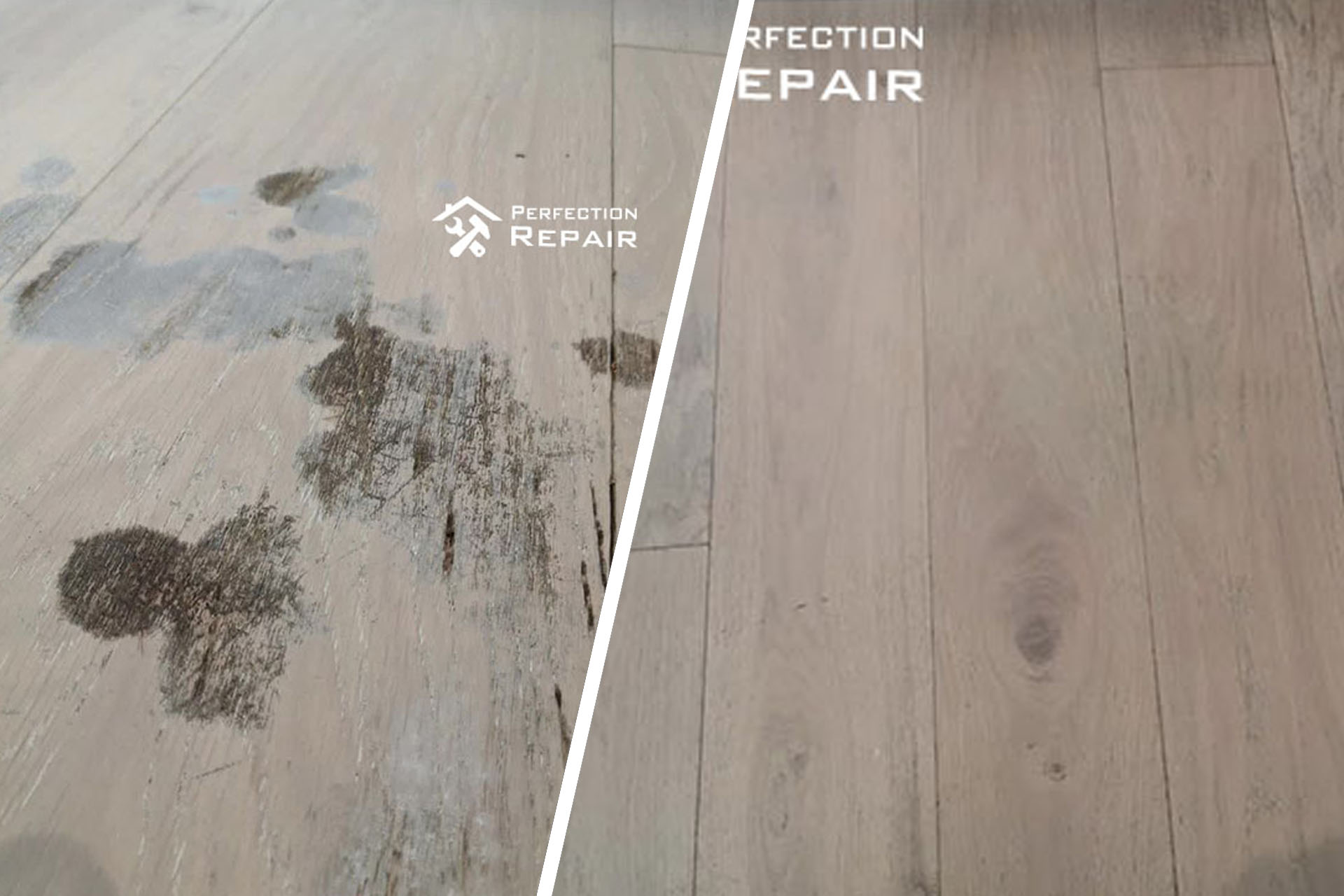
Wooden Floor Restoration After Chemical Spill | Rhodes, Sydney
Case study: localised timber floor restoration after a chemical spill damaged the lacquer finish in a Rhodes apartment. Completed in 4 hours with no full-floor sanding required.
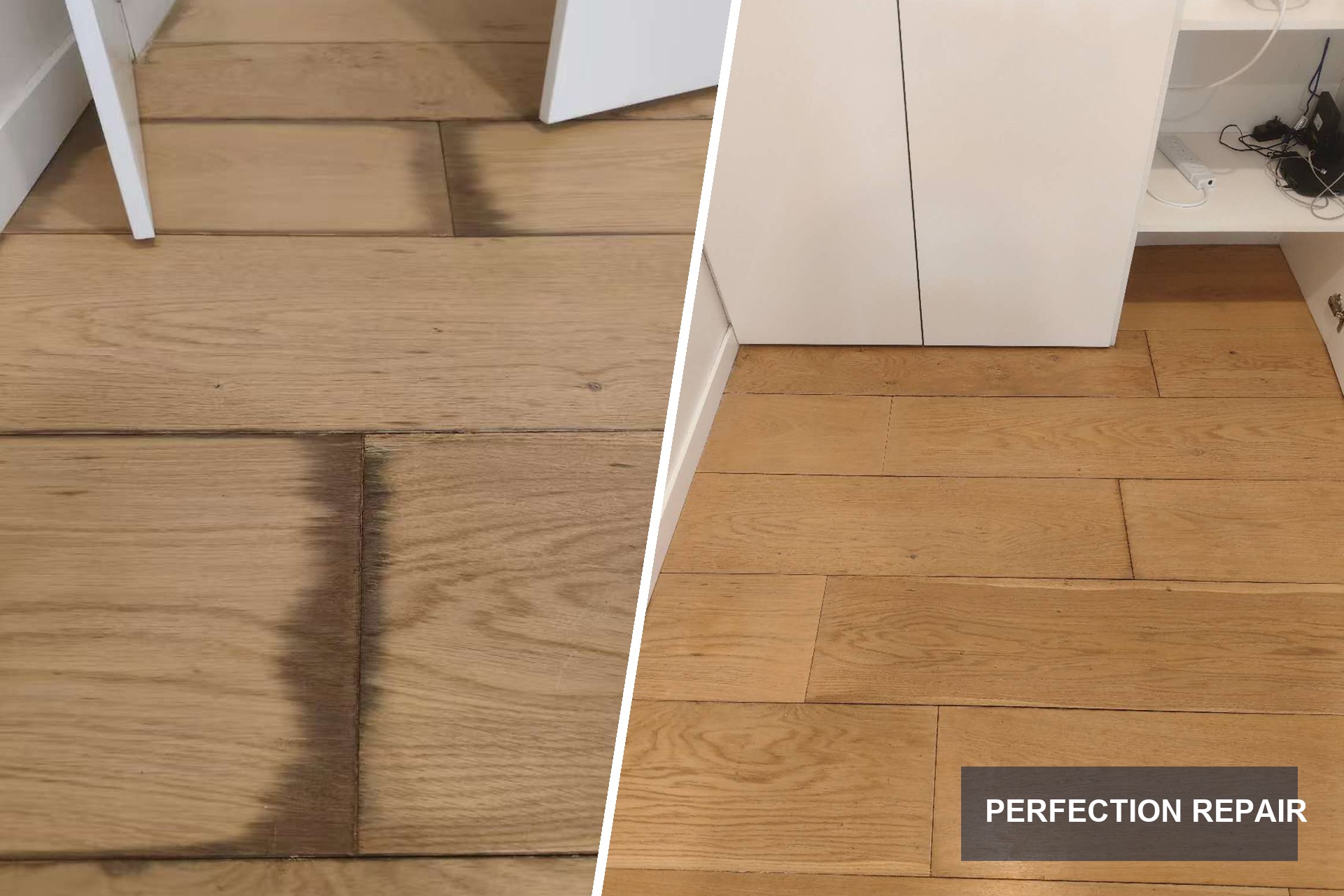
Timber Floor Water Damage Repair at Macquarie University, Sydney
A Macquarie University apartment timber floor was affected by bathroom water damage, moisture staining and mould. Perfection Repair completed a localised floor restoration in five hours.