


When One Chipped Plank Doesn’t Mean a New Floor
Laminate and floating floors are repaired differently from solid timber. There is no sanding involved — the wear surface is a printed layer under melamine, and any attempt to sand it removes the pattern entirely. The only viable repair method is filling, colour matching, and texture replication.
This is where most general handymen stop and recommend a full replacement. It is also where we start.
We carry the materials and tools to repair individual planks on-site: colour-mixed resins, texture imprinting tools, and flexible topcoats calibrated for floors that expand and contract. The result in most cases is a repair that is invisible at standing height.
How We Repair Chipped Laminate Planks {#chip-repair}
When a plank chips — usually from a dropped pot, a furniture leg, or something heavy dragged across the surface — the MDF core underneath gets exposed. Left alone, that exposed core absorbs moisture and swells, which makes the damage worse over time.
The repair process closes that exposure before it becomes a structural problem. We clean out the chip, fill it with a resin matched to your floor’s base colour, then use texture imprinting tools to replicate the grain or stone pattern of the surrounding surface before the resin cures. Once it sets, we apply a topcoat matched to the sheen level of your floor — whether that is a flat matte, a satin, or a semi-gloss.
For most single-plank chips, the whole process takes under two hours.
Peaking, Lifting, and Edge Damage {#peaking-repair}
Boards that lift at the joints — sometimes called peaking — are usually a sign that the floor has no room to expand. Floating floors move with temperature and humidity changes, and if the expansion gap at the skirting board is too small, the pressure has to go somewhere.
We assess the extent of the peaking before doing anything. If it is limited to a section near a wall or doorway, we can relieve the pressure and reset those boards without touching the rest of the floor. If the edges of individual boards are also damaged or chipped from the lifting, we repair those at the same time.
Bubbling along edges from minor water exposure is a related issue. If the boards have not yet swollen significantly, the affected edges can be stabilised and refinished. If the MDF core has already swollen, we advise on whether localised plank replacement is a better path.
Vinyl and Hybrid Plank Repair {#vinyl-repair}
Hybrid and vinyl planks are the most common floating floor in Sydney apartments and new builds, and they present their own repair challenges. Unlike laminate, the wear layer on hybrid planks is thicker and fully waterproof, but it is still susceptible to deep gouges, scuffs, and surface tears.
We use flexible resins for hybrid plank repairs — standard rigid fillers crack over time on a floor that moves. Colour matching on vinyl and hybrid surfaces requires a different pigment approach than laminate, and we carry materials for both. Common plank ranges from major suppliers are straightforward to match. For discontinued or imported ranges, we mix the colour on-site against your actual floor.
Repair vs. Replacement: A Practical Comparison
A full laminate floor installation in a standard Sydney living area costs between $3,000 and $8,000 depending on the product and labour involved. It also means moving all furniture, removing skirtings, and losing access to the room for at least a day, often longer.
Most repairs we carry out cost a fraction of that and are completed in a single visit. The floor is usable the same day.
There are situations where replacement is the right answer — if a large area has sustained water damage and the boards have swollen throughout, or if the flooring range is still available and the damage is too widespread to repair efficiently. We will tell you honestly if that is the case rather than attempting a repair that will not hold.
Our service covers Greater Sydney including Rhodes, Epping, Burwood, Castle Hill, the CBD, and surrounding suburbs.
Service Areas
Common Questions
Can a single laminate floorboard be repaired without replacing the whole floor?
What causes laminate floors to peak or lift at the edges?
Is the repair material as durable as the original laminate?
My floor is a hybrid plank — can you still match the colour?
How long does a laminate floor repair take?
Related Floor Restoration Projects
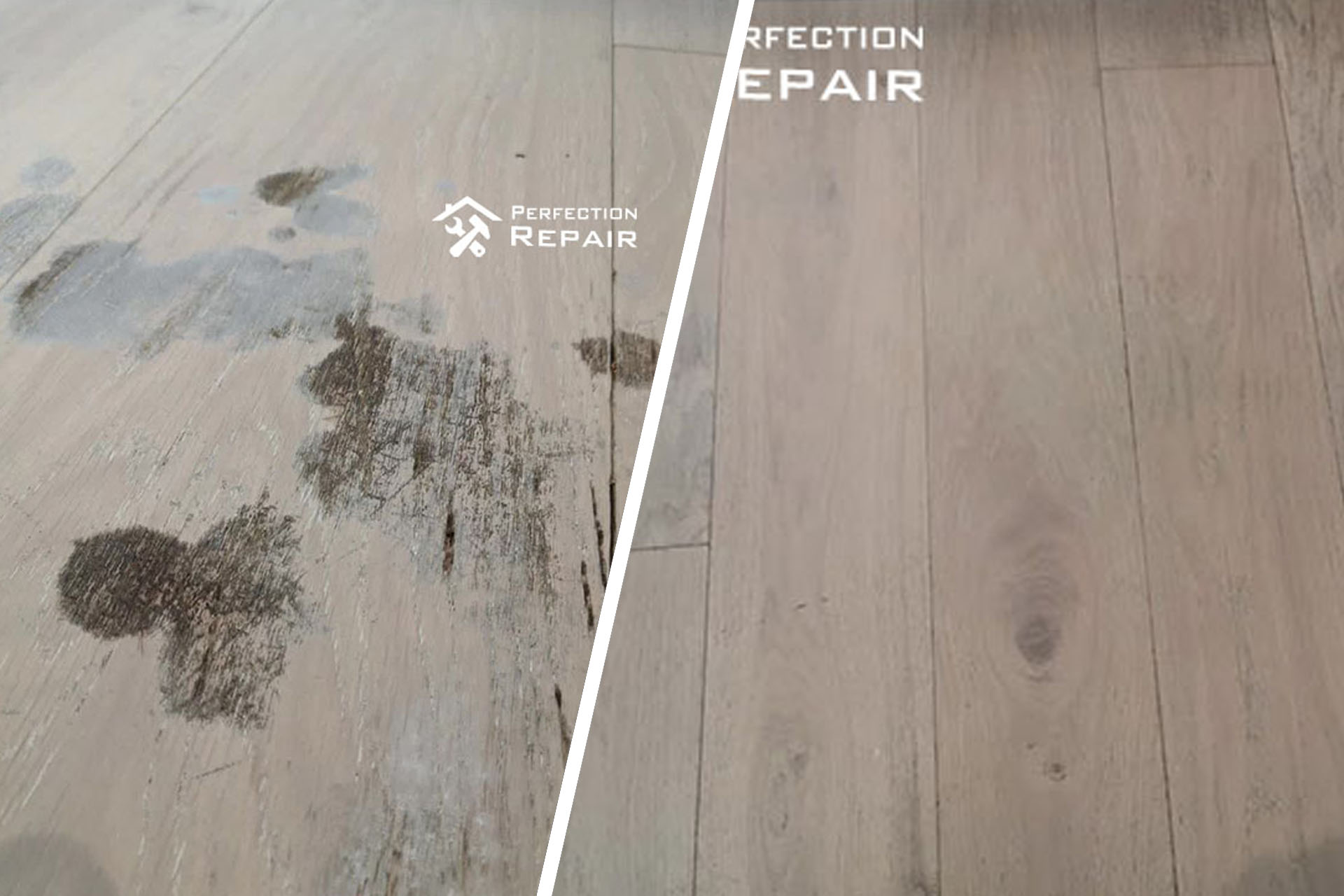
Wooden Floor Restoration After Chemical Spill | Rhodes, Sydney
Case study: localised timber floor restoration after a chemical spill damaged the lacquer finish in a Rhodes apartment. Completed in 4 hours with no full-floor sanding required.
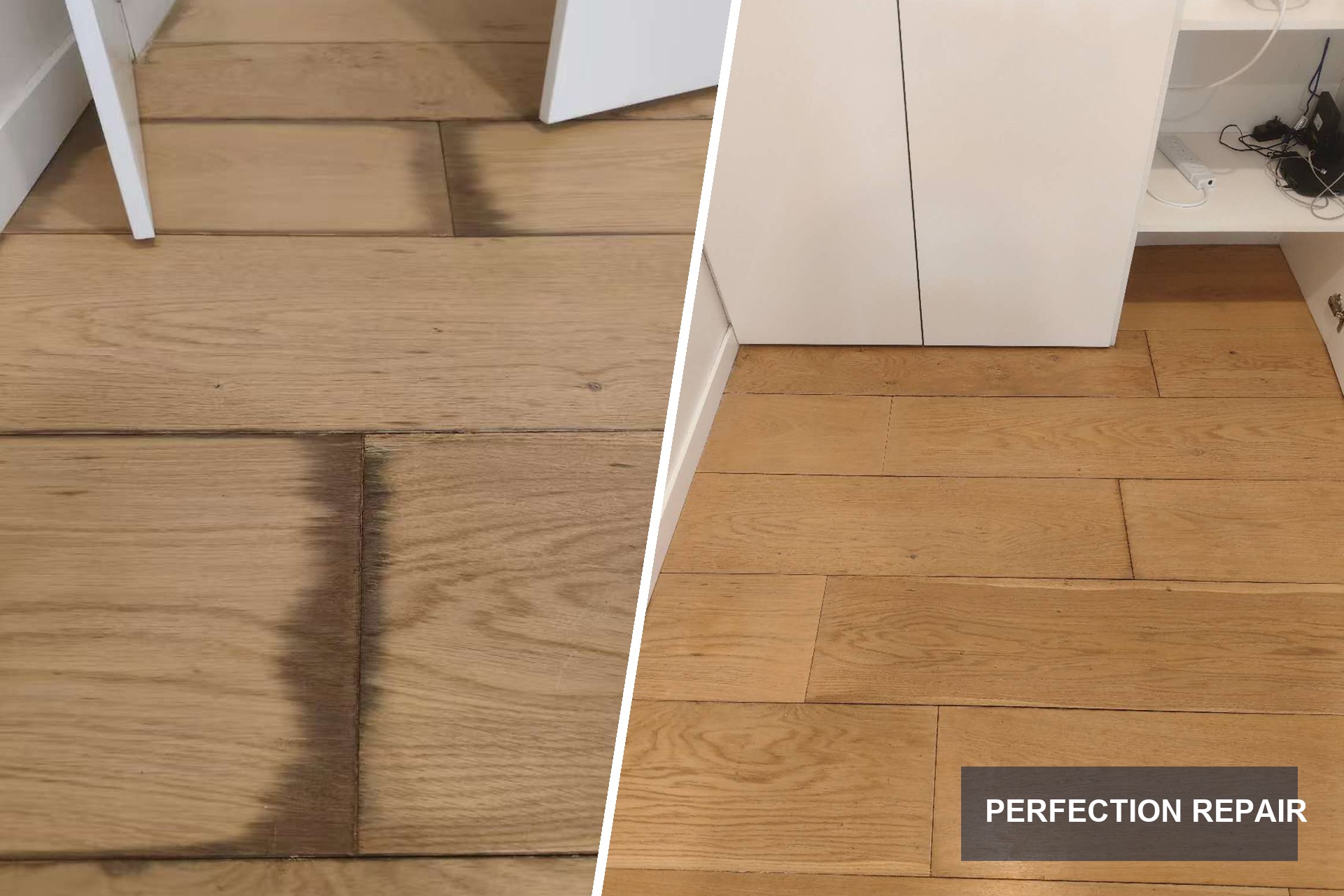
Timber Floor Water Damage Repair at Macquarie University, Sydney
A Macquarie University apartment timber floor was affected by bathroom water damage, moisture staining and mould. Perfection Repair completed a localised floor restoration in five hours.