


Why Stone Benchtops Chip and What Can Be Done
Stone benchtops — both engineered quartz and natural stone — are hard but not indestructible. The most vulnerable points are the edges, particularly at corners and around sink cutouts where the stone has no support underneath. A dropped pot, a heavy object catching the corner, or impact from a hard object during cleaning is usually all it takes to break off a section of edge.
The white or light-coloured mark that results is visible because the break exposes the unpolished interior of the stone, which reflects light differently from the polished surface around it. It is not just cosmetic — an open chip also exposes the stone to moisture and, on engineered quartz, can compromise the resin binder that holds the material together.
In most cases these chips are repairable without replacing the benchtop.
Edge Chip Repair {#edge-chip}
Repairing an edge chip involves three stages: rebuilding the missing material, colour matching, and polishing to restore the surface finish.
We fill the chip with a compound selected for the specific stone type — engineered quartz requires a different product from natural marble or granite. The compound is built up in layers rather than applied in one pass, which produces a more stable result without the shrinkage that causes single-fill repairs to sink slightly below the surface level over time.
Colour matching is done on-site against your actual benchtop. For plain or lightly speckled engineered stone, this is straightforward. For surfaces with strong veining — marble, or veined engineered ranges like Calacatta or Statuario styles — we replicate the vein pattern across the repair by hand using fine-tip tools before the compound sets.
The final stage is polishing the repair to match the surrounding surface finish. Most Sydney kitchens have either a polished (mirror) or honed (matte) finish, and we carry the diamond abrasives to achieve both. A repair with correct colour but incorrect sheen is still visible from across the room, so sheen matching is not optional.
Surface Crack Repair {#crack-repair}
Cracks in stone benchtops typically start at stress points — the corners of sink cutouts, joins between slabs, or areas where the cabinet support is uneven. A surface crack that is caught early is easier to repair and less likely to propagate than one that has been present for some time.
We assess the crack depth before deciding on the repair approach. A surface crack that has not penetrated the full thickness of the slab is cleaned, stabilised with penetrating adhesive, filled, and refinished. A through-crack — one that goes all the way through the slab — requires stabilisation from below where possible before the surface is addressed.
If the crack is being driven by an underlying cause — a cabinet that has shifted, uneven support, or thermal movement — that cause needs to be addressed first, otherwise the crack returns. We flag this during the assessment.
Scratch and Etch Removal {#scratch-etch}
Scratches on polished stone and acid etching on marble are different problems that are sometimes confused.
A scratch is physical damage — the surface has been abraded by something harder than the stone finish. On polished engineered stone, scratches can often be re-polished away using diamond abrasives without any filling, provided the scratch has not cut deeply into the material itself.
Etching is a chemical reaction. Marble and some natural stones are calcium-based and react with acids — citrus juice, vinegar, wine, some cleaning products — producing a dull patch where the polish has been dissolved. The stone itself is not damaged, but the finish is. Etched areas are addressed by re-polishing rather than filling, working the affected area back to the same gloss level as the surrounding surface.
For large etched areas across a significant portion of a marble benchtop, we assess whether localised re-polishing or a full surface refinish is the more practical approach.
Engineered Stone Brands We Work On
We carry out repairs on all major engineered quartz brands available in Sydney:
Caesarstone, Silestone, Smartstone, Essastone, Quantum Quartz, Technistone, and Laminam. We also work on natural marble, granite, travertine, and limestone benchtops.
If you are unsure of your benchtop brand or stone type, we can usually identify it on-site from the appearance and material characteristics.
End-of-Lease and Pre-Sale Repairs
Stone benchtop chips are frequently flagged at end-of-lease inspections and pre-sale building reports. A chip that a tenant considers minor is often quoted by a property manager as requiring full benchtop replacement — at a cost well above what a professional repair would actually cost.
We carry out stone benchtop repairs for tenants, landlords, and vendors preparing properties for sale across Sydney. We can usually schedule within 24 to 48 hours and complete the work in a single visit. For pre-sale surface repairs more broadly, see our guide on what to fix before going to market.
Our service covers Greater Sydney including the CBD, North Shore, Eastern Suburbs, Inner West, Parramatta, and the Northern Beaches. Contact us for an on-site assessment and quote.
Service Areas
Common Questions
Can you fix a chip on a Caesarstone edge?
Will the repair be visible?
How long does a stone benchtop repair take?
Do you repair marble as well as engineered stone?
Can you fix a crack running from the sink cutout?
Is stone benchtop repair cheaper than replacement?
Related Benchtop Restoration Projects
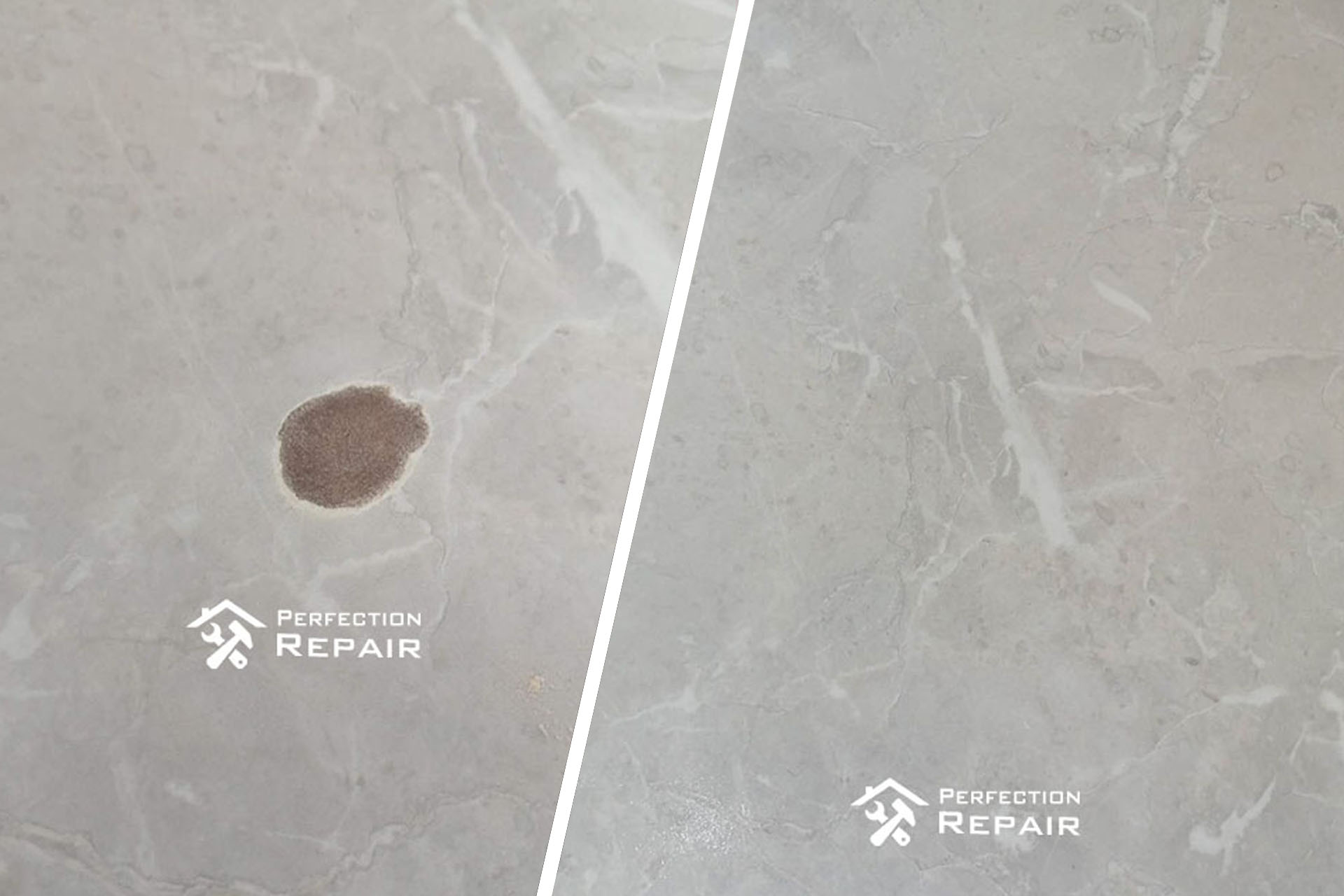
Laminate Benchtop Chip Repair | Manly, Sydney
Case study: localised repair of a chipped laminate benchtop in a Manly kitchen. On-site colour and pattern matching to an aged laminate surface, completed in under 3 hours without board replacement.
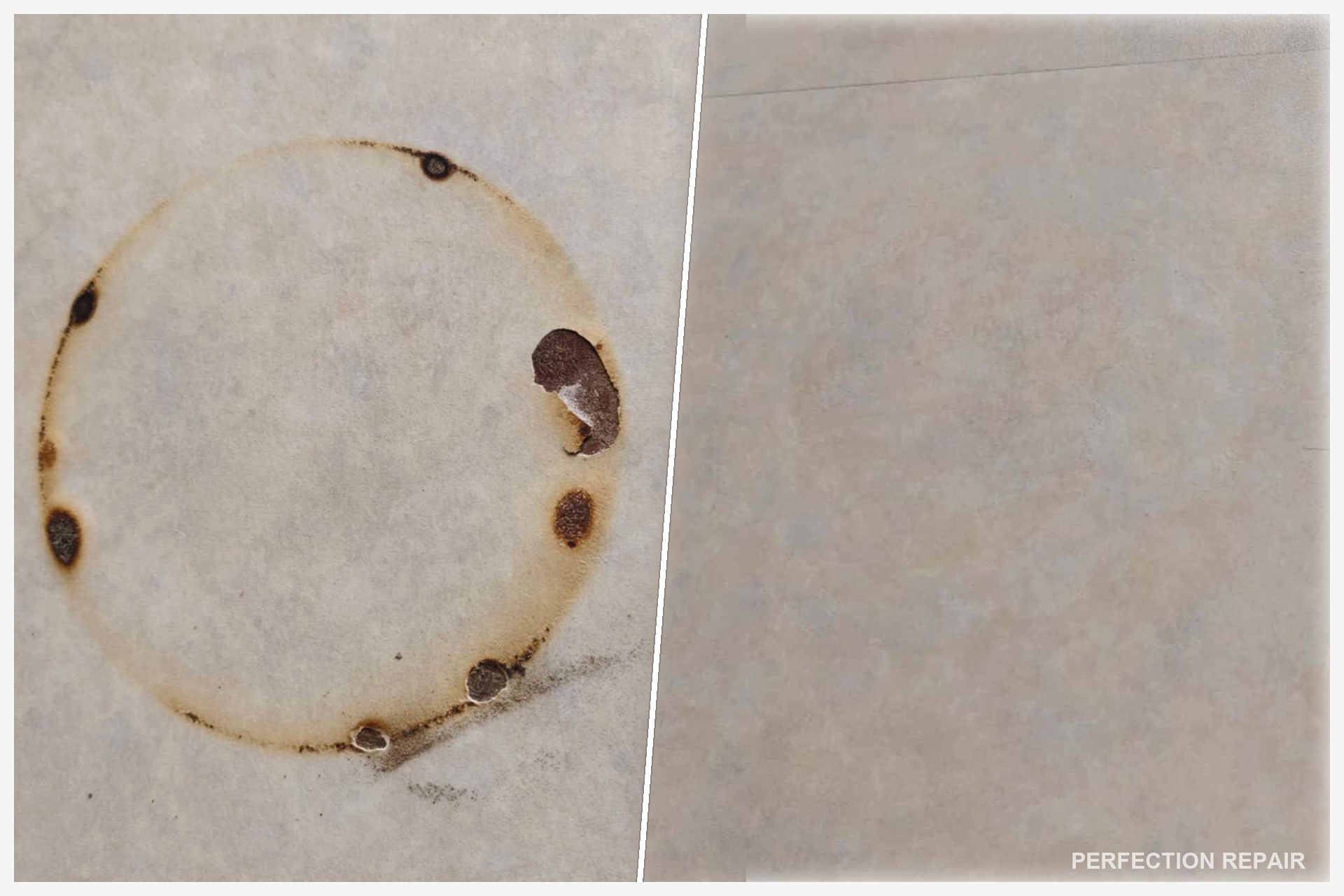
Laminate Benchtop Burn Mark Repair | Dee Why, Sydney
Case study: on-site repair of heat damage and charred pit marks on a laminate benchtop in a Dee Why kitchen after a hot pan was set down directly on the surface, completed without board replacement.