


What Water Actually Does to a Floor
Water damage in floors is not just a surface problem. When moisture gets into timber, it causes the wood fibres to swell. When it dries unevenly — faster on top than underneath — the boards cup. When it reacts with the natural tannins in the wood, it produces the black staining that many people first notice around leaking appliances or plant pots.
Laminate responds differently. The MDF core absorbs water quickly and swells, which is what causes the bubbling and edge-lifting you see after a leak. Once the core has fully swollen, the surface layer separates and the board is generally beyond repair. But if the leak is caught early, the core can often be dried and stabilised before that point.
The difference between a repair job and a replacement job usually comes down to how long the moisture has been there.
Dark Water Stain Treatment {#stain-removal}
Black staining on timber is a chemical reaction between water and the tannins naturally present in the wood. It is not always visible immediately — sometimes it appears days after a spill, as the tannin oxidation works its way to the surface.
We treat these stains with oxalic acid-based neutralisers that reverse the oxidation without damaging the surrounding wood fibres. After neutralisation, the area is dried, filled if needed, and refinished to match the surrounding boards in both colour and sheen. For persistent deep staining where the discolouration has penetrated well into the timber, we assess whether the board needs to be replaced or whether a deeper treatment is viable.
Common sources we deal with: leaking fridges and dishwashers, plant pot overflow on timber floors, pet accidents that went unnoticed, and slow drips from pipes under kitchen benchtops.
Swollen and Bubbling Edges {#swollen-edges}
Laminate and hybrid plank edges are the most vulnerable point of a floating floor. The join between boards is where water finds its way in, and once the MDF core starts absorbing moisture, it swells from the edge inward.
Early-stage swelling — where the edges have lifted slightly but the core is not yet saturated — can be treated by drying the affected area, applying stabilising adhesive to the swollen edges, and clamping them flat while the adhesive sets. The joins are then resealed with moisture-resistant compound.
Later-stage swelling, where the core has fully expanded and the surface layer has separated, generally means the board needs replacing. If the range is still available, we can source matching boards. If it has been discontinued — which is common in Sydney apartments where specific ranges were used for a single development — we work with what is closest and blend the repair into the surrounding floor.
Cupping and Warping in Solid Timber {#cupping-repair}
Cupping in solid timber is caused by moisture imbalance between the top and bottom face of the board. The underside gets wet — from a subfloor moisture issue, a spill that soaked through joins, or condensation — and expands more than the dry top surface, pulling the edges upward.
Mild cupping that has not been in place long can often be reversed by addressing the moisture source and allowing the floor to dry evenly. We use moisture meters to map the extent of the problem first, including checking areas of the floor that look flat but may have elevated readings. If the subfloor has ongoing moisture issues — rising damp, poor ventilation under the house — those need to be addressed first, otherwise the cupping returns.
For boards that have cupped and dried in that position over an extended period, the deformation may be permanent. In those cases we assess whether localised board replacement is more practical than attempting to force flat boards that have set in a curved state.
Coastal and High-Humidity Properties
Sydney’s coastal suburbs present specific challenges for floor moisture management. High ambient humidity — particularly in Manly, Cronulla, and beachside areas of the Eastern Suburbs — means floors are working harder to stay dry year-round. Salt air also accelerates corrosion of any metal fixings in the subfloor, which can contribute to moisture problems.
We factor the local environment into our assessment and repair approach for coastal properties. Seals and moisture barriers are selected for durability in high-humidity conditions rather than standard interior use.
Our service covers Greater Sydney including Manly, Cronulla, Ryde, Blacktown, the Inner West, and the CBD.
Service Areas
Common Questions
Can water-stained timber floors be fixed without replacing the boards?
My laminate floor is bubbling at the edges after a leak. Is it ruined?
How do I know if my floor has subfloor moisture problems?
What is floorboard cupping and can it be reversed?
Does water damage always mean mould under the floor?
Will my insurance cover water damaged floor repair?
Related Floor Restoration Projects
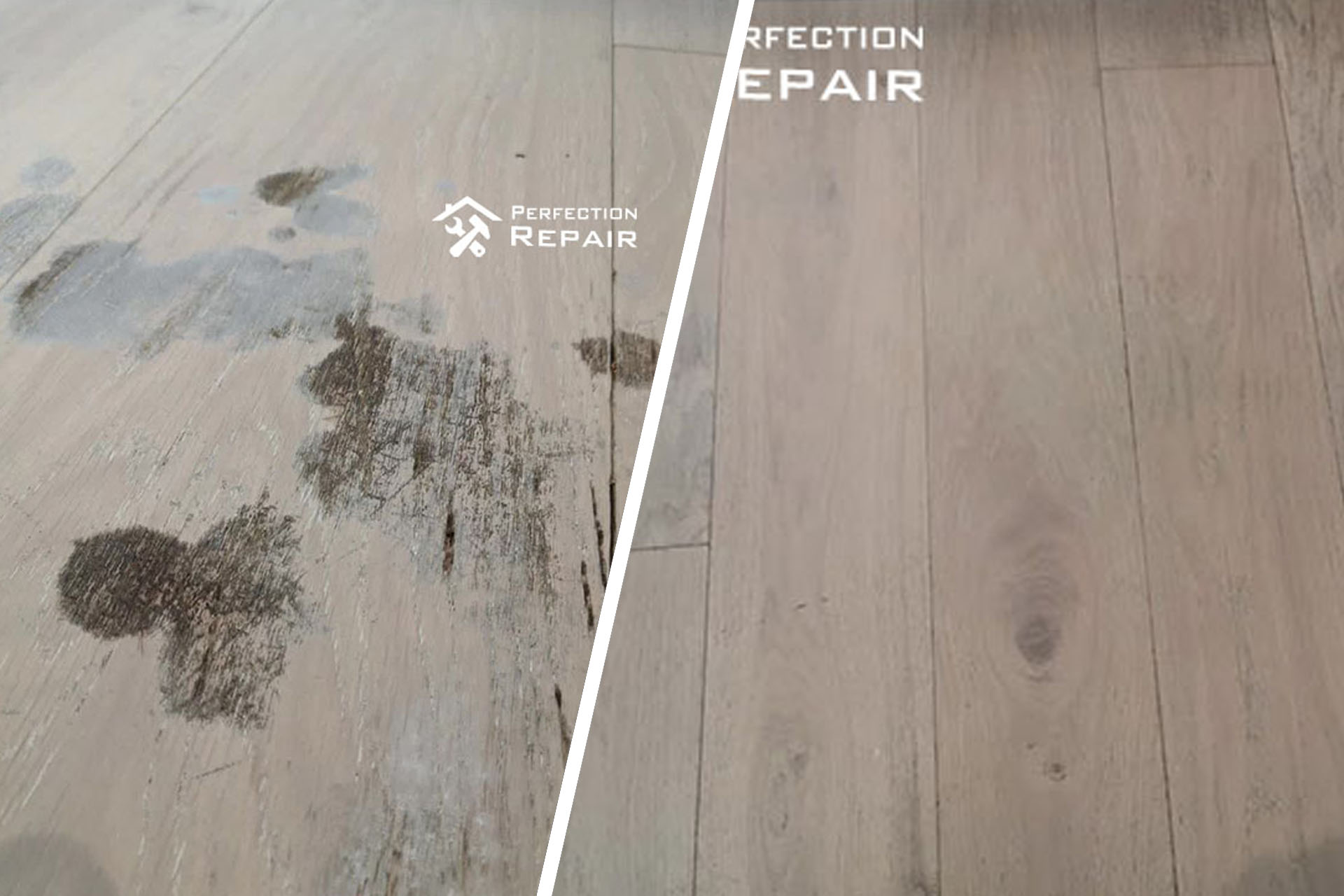
Wooden Floor Restoration After Chemical Spill | Rhodes, Sydney
Case study: localised timber floor restoration after a chemical spill damaged the lacquer finish in a Rhodes apartment. Completed in 4 hours with no full-floor sanding required.
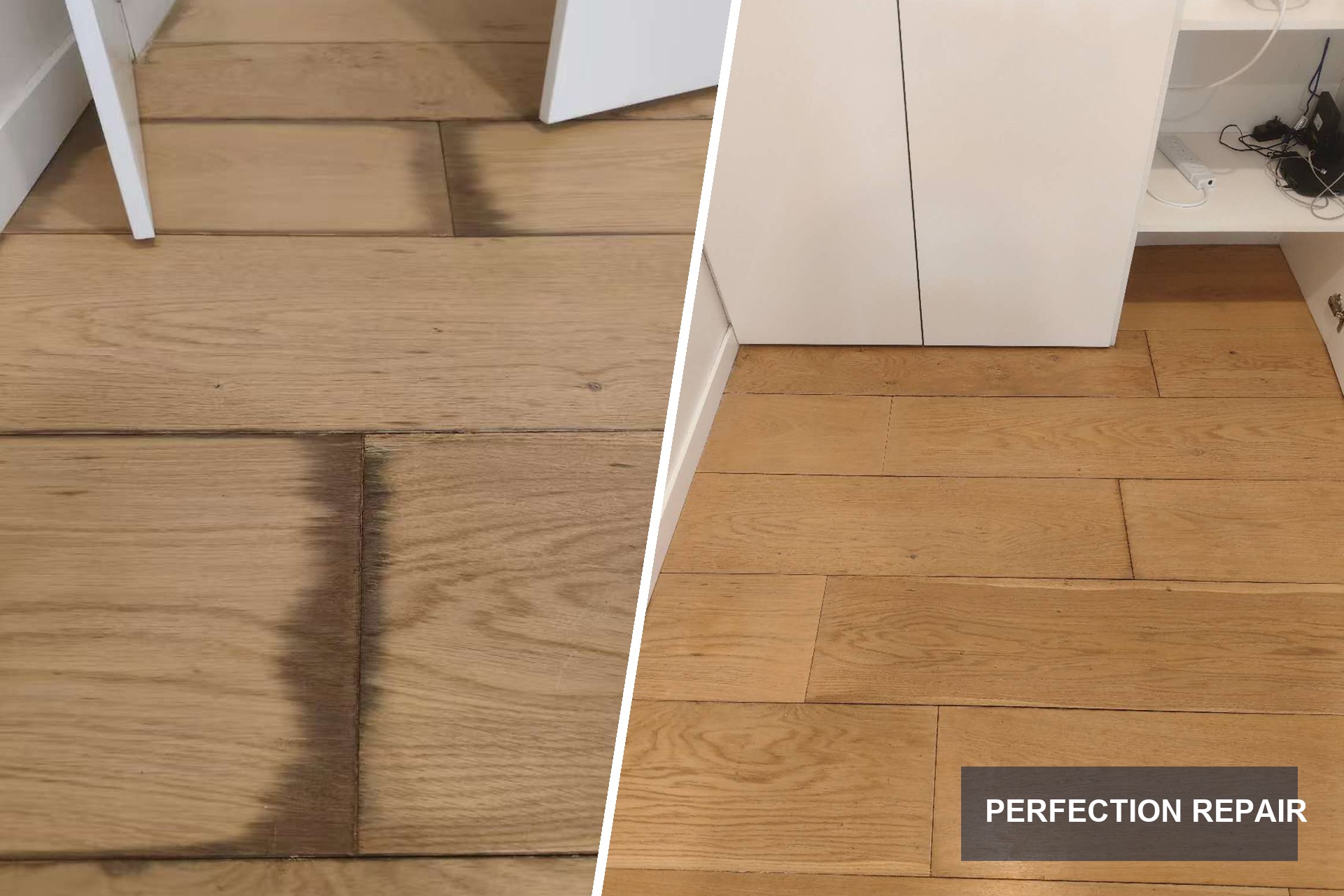
Timber Floor Water Damage Repair at Macquarie University, Sydney
A Macquarie University apartment timber floor was affected by bathroom water damage, moisture staining and mould. Perfection Repair completed a localised floor restoration in five hours.