

Furniture Damage Between Tenancies: Repair or Replace?
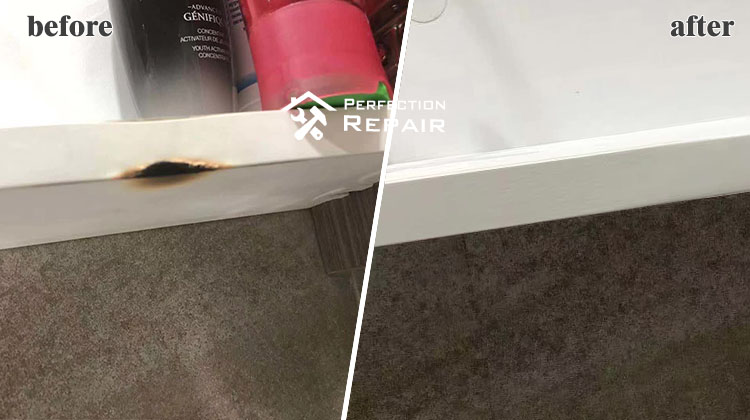
A scratched dining table. Heat marks on a sideboard. Paint lifting on a chair frame. A dent in a cabinet door from something dropped or dragged.
These are standard wear-and-tear escalations — damage that’s clearly beyond normal use and will be flagged on a condition report, but doesn’t justify replacing the entire piece. The problem with replacement is that furnished properties rarely have exact matches available. Swap one chair and it doesn’t match the rest of the set. Replace a sideboard and the finish doesn’t match the other pieces in the room.
Repair keeps the original item in service and avoids the sourcing problem entirely.
What We Repair
Surface scratches and scuff marks are the most common item flagged between tenancies. Depth determines the approach — scratches confined to the finish layer are filled and colour-matched; deeper scratches that have reached the timber require grain replication before the finish coat goes on. Either way, the repaired area blends back into the surrounding surface.
Dents and impact damage — the approach depends on the timber density and finish type. We assess the piece on-site before deciding on the method and give you a realistic picture of the result before any work starts.
Paint and lacquer peeling or discolouration — finish that has lifted, yellowed, or become uneven. Common on chair frames and table legs in rental properties where cleaning products have been used repeatedly on the surface. We strip and recoat the affected area, matched to the sheen level of the surrounding finish.
Water marks and heat stains — the white rings and cloudy patches that appear when moisture or heat gets trapped under a lacquer finish. In most cases the finish can be cleared and restored without stripping the full piece. If the stain has penetrated the timber, the repair scope changes and we’ll tell you that before proceeding.
Why Colour Matching Is the Determining Variable
A repair that’s structurally sound but visibly mismatched will still be flagged at inspection. Getting the colour right is what determines whether the result holds up.
Furniture finishes age. Light exposure, cleaning products, and years of use shift the surface tone away from its original specification. A repair mixed to the factory colour of a piece that’s been in a rental property for several years will read as a noticeably brighter patch against the surrounding aged finish — exactly the condition an agent checks for under directional lighting during a walkthrough.
We mix on-site, calibrating the pigment blend against the actual surface rather than any reference chart. The technician checks the match under the room’s ambient lighting before applying. For pieces with visible grain patterns, we replicate the grain texture across the repaired area so the transition isn’t visible on close inspection.
Scheduling Around Changeovers
Most surface repairs are completed in two to four hours on-site. The furniture stays in the room — nothing needs to be moved to a workshop, and there’s no waiting period for the item to be returned.
For property managers coordinating between tenancy changeovers, we schedule to fit the window: before the cleaner, before the final inspection, or before the incoming tenant’s move-in date. We service properties across Sydney and work with management agencies on an ongoing basis.
If you have a condition report with furniture items flagged and an inspection coming up, contact us with the date and damage details. We’ll confirm whether we can schedule within the window and what the repair involves before you commit to anything.