

When a Scratch Does Not Mean a New Floor
Timber floors are durable but not scratch-proof. A dropped cast iron pan, a chair leg dragged across the surface, a dog that runs to greet you at the door every day — these leave marks. The question is whether a full sand and polish is the right response, or whether localised repair makes more sense.
For most individual scratches and gouges, sanding the entire floor is unnecessary. The damage is in one place. The fix can be in one place too.
We repair timber floor scratches on-site without sanding, without dust, and without clearing the room. The process takes a few hours for most jobs, and the floor is usable the same day.
Deep Gouge Repair {#gouge-repair}
A deep gouge breaks through the finish and into the timber itself. Left open, it collects dirt and moisture, which can darken the wood around it over time and eventually lead to more significant damage.
The repair starts by cleaning out the gouge and stabilising any loose fibres at the edges. We fill with a thermal-bonding resin mixed to match your floor’s base colour — not a generic filler, but a blend matched to that specific board. Once the fill is shaped flush with the surface, we use fine-tip tools to paint grain lines across the repair that follow the pattern of the surrounding timber.
The last step is sheen matching. A repair with the right colour but the wrong gloss level still looks like a repair. We finish the patch with a topcoat calibrated to your floor — whether that is a flat matte, a satin, or a semi-gloss — so the surface reads consistently across the repaired area and the boards around it.
Furniture Scuff Removal {#scuff-removal}
White scuff marks are a different problem from gouges. They are usually caused by friction rather than impact — chair legs dragging, furniture being moved, rubber-soled items sitting on the surface. The white appearance comes from the finish being abrared rather than the timber being cut.
Shallow scuffs on a polished surface can often be re-polished away without any filling. We assess the depth first. If the scuff has only affected the finish layer, we work the area with progressively finer compounds until the mark disappears and the surrounding sheen is restored. If the timber itself has been scuffed, we fill and re-grain as needed.
Either way, the result is a floor without the white drag marks that tend to catch the light from across the room.
Pet Scratch Restoration {#pet-scratches}
Claw marks from dogs tend to cluster in specific areas — in front of doors, along hallways, around feeding areas. Individual scratches are easy to repair. A concentrated cluster across several boards takes longer but is still a localised job.
We work board by board through the affected area, filling and re-graining each scratch individually. The grain direction and colour vary slightly from board to board in most timber floors, and matching each one separately produces a better result than treating the whole area as a single patch.
For rental properties, we frequently carry out pet scratch repairs before a final inspection. The repairs are typically invisible enough that they are not flagged during routine property assessments.
Engineered Timber Floors
Engineered boards have a hardwood veneer on top, usually between two and six millimetres thick. Every time an engineered floor is sanded, that veneer gets thinner. Some boards can only be sanded once or twice before the veneer is gone entirely.
Localised repair does not thin the veneer. We work on the surface of the damaged board without removing material from the surrounding floor. For engineered timber that has already been sanded, or for boards where the veneer is thin, repair is often the only option that does not risk destroying the floor.
We work on all major engineered timber brands and species common to Sydney homes and apartments.
Timber Species We Work On
Australian hardwoods each have their own colour range, grain character, and response to repair pigments. Blackbutt has a pale, even grain. Spotted Gum has strong figure and colour variation. Jarrah is deep red with interlocked grain. Sydney Blue Gum sits somewhere in between.
We adjust our pigment mix and grain painting approach for each species. Bringing the wrong colours to a Jarrah floor and hoping for the best is not how the job gets done well.
We also work on Tasmanian Oak, Victorian Ash, Bamboo, and most imported hardwood species. If you are unsure what species your floor is, we can usually identify it on-site from the grain and colour.
Our service covers Greater Sydney including the CBD, North Sydney, Chatswood, Parramatta, Eastern Suburbs, and the Northern Suburbs.
Service Areas
Common Questions
Can deep scratches be fixed without sanding the whole floor?
Will the repair be visible once finished?
Is this suitable for engineered timber floors?
What timber species do you work on?
My floor has a matte finish. Can you match it?
How long does a scratch repair take?
Related Floor Restoration Projects
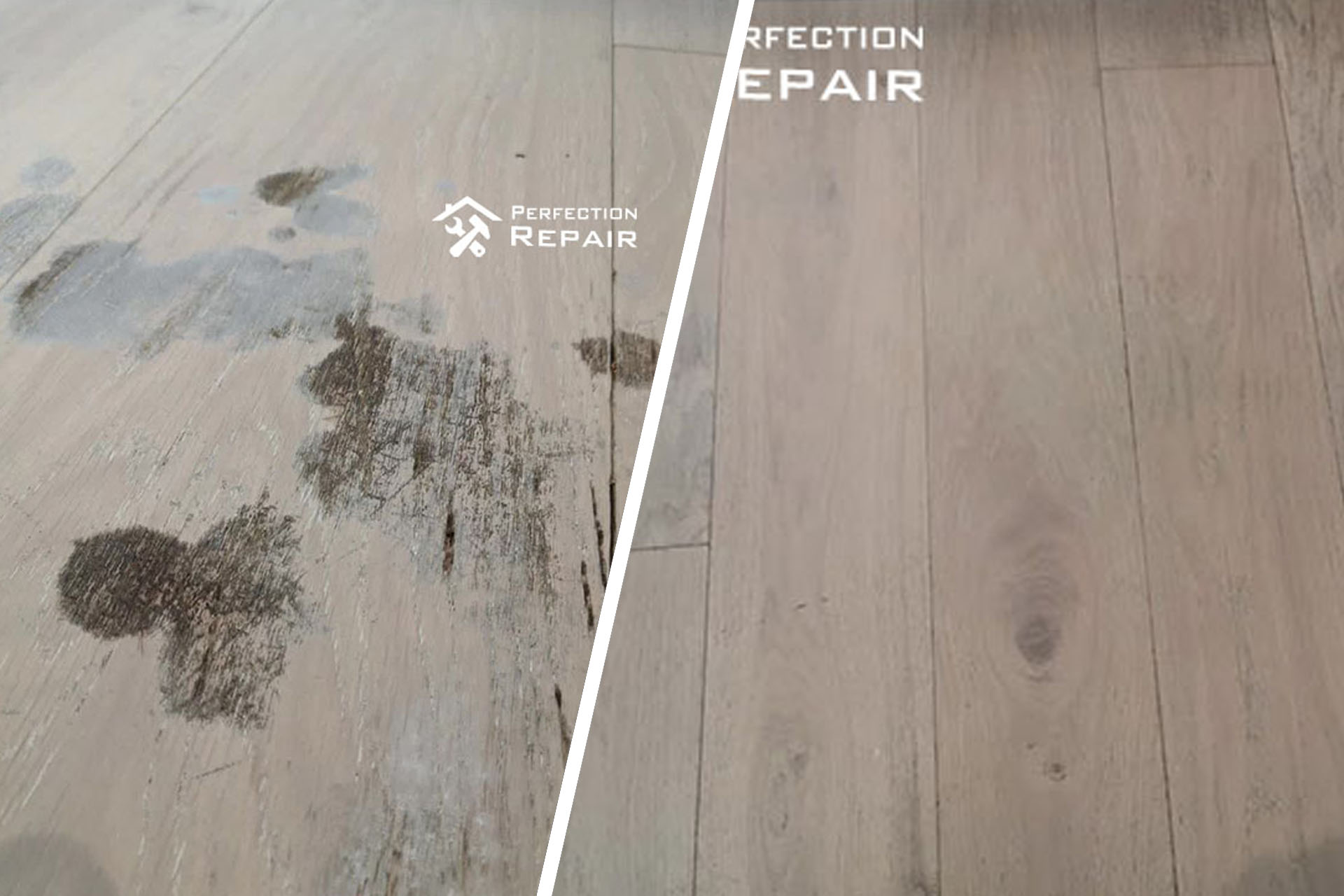
Wooden Floor Restoration After Chemical Spill | Rhodes, Sydney
Case study: localised timber floor restoration after a chemical spill damaged the lacquer finish in a Rhodes apartment. Completed in 4 hours with no full-floor sanding required.
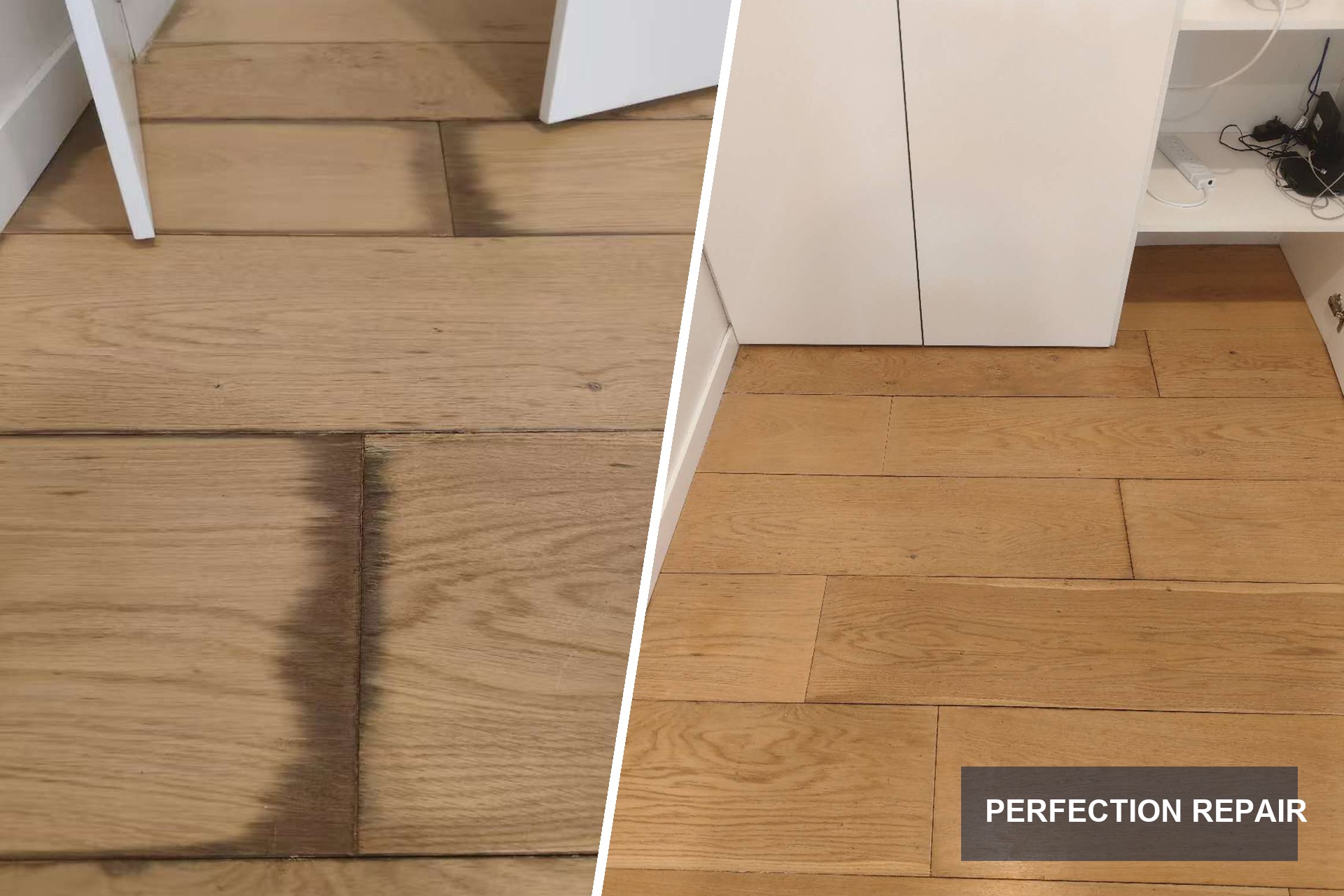
Timber Floor Water Damage Repair at Macquarie University, Sydney
A Macquarie University apartment timber floor was affected by bathroom water damage, moisture staining and mould. Perfection Repair completed a localised floor restoration in five hours.