

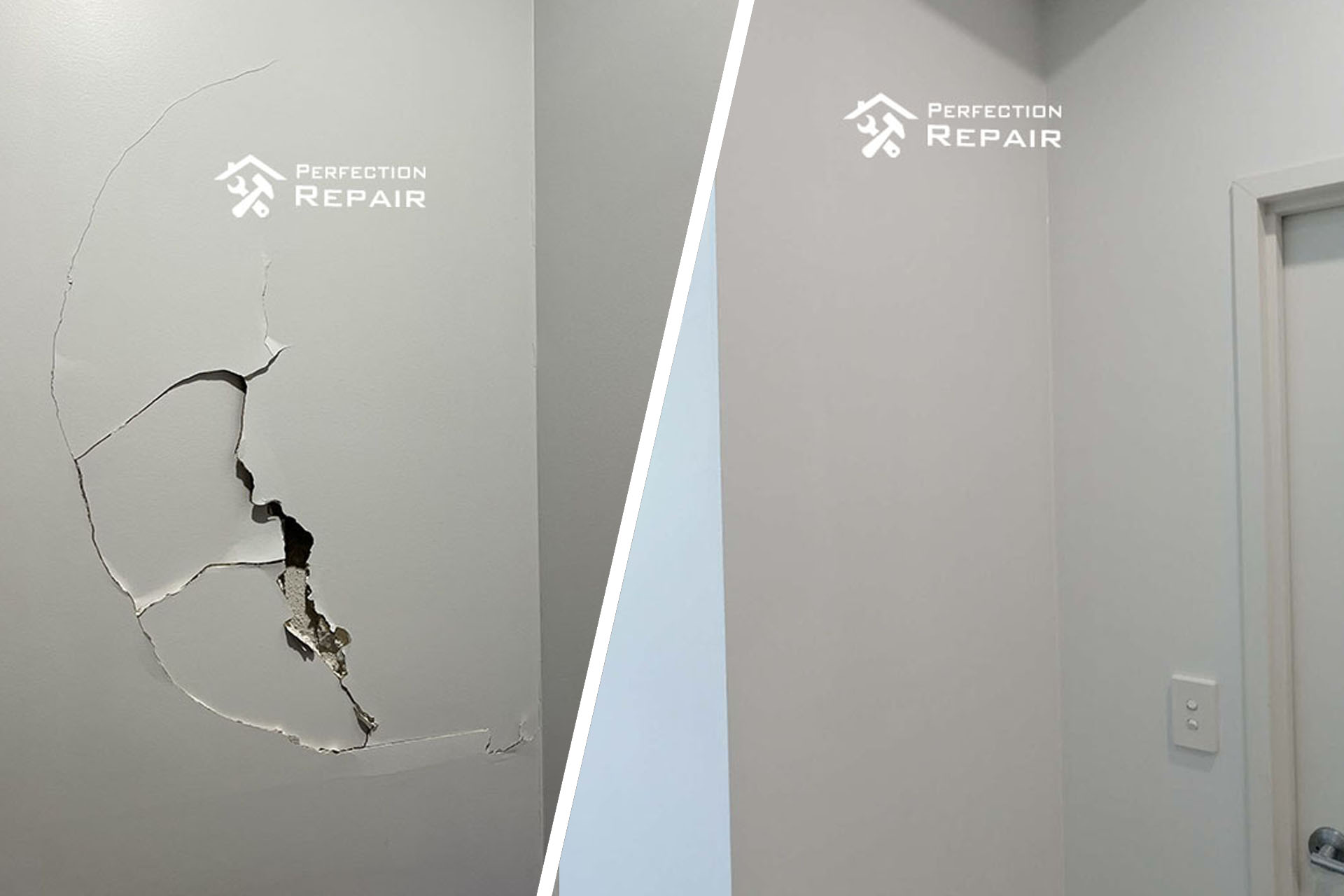
The Hole That Appeared During the Move
Shifting a large piece of furniture through a narrow hallway, a corner caught the wall. The plasterboard gave way cleanly — a roughly fist-sized hole, straight through to the cavity, in a room that would be inspected by the property agent in three days.
The tenant knew it would be flagged. A hole that size isn’t something an agent walks past, and plasterboard damage is one of the most common grounds for a bond deduction at end of lease. They needed it repaired, set, and painted before the inspection — not patched with filler from a hardware store, which would visibly shrink and crack before it even dried.
The Practical Problem With Large Holes
Small holes in plasterboard — screw holes, picture hooks — can be filled directly because there’s enough surrounding material to support the compound. A hole this size has nothing for the filler to key into. Fill it without backing and the compound sits unsupported: it sinks as it dries, cracks along the edges, and flexes when pressed. An inspector running a hand across the wall will feel it immediately.
The first step was installing a backing plate inside the cavity — a rigid bridge across the void that gives the repair a stable base. From there, the fill goes in layers, each allowed to set before the next is applied. Rushing the build produces shrinkage cracks at the surface. Once flush, the edges are feathered outward with progressive sanding so the repair dissolves into the surrounding wall rather than sitting as a raised disc.
The last variable is paint. This wall had been painted once and left — probably when the tenancy began, possibly before. The existing surface had shifted from its original tone over time. A fresh coat of the same white specification would show as a noticeably brighter rectangle under the raking light an inspector uses to check surfaces. We mixed on-site to match the current aged tone, applied by roller to replicate the existing texture, and checked the result under both flat and angled light before calling it done.
The entire job took under three hours.
The Inspection
The agent conducted the end-of-lease walkthrough two days later. The wall wasn’t noted.
The tenant received the bond back in full. For a repair that cost a fraction of a bond deduction on a Sydney rental, the economics are straightforward — but the result only holds if the repair is done correctly the first time, before the inspection, not after a failed DIY attempt makes the job harder.
If you have plasterboard damage in Sydney and an inspection coming up, the timeline is the main constraint. Contact us with the date and we’ll confirm whether we can schedule within the window.
Workflow

Structural Backing
A hole this size — roughly the diameter of a fist — has no material left to bond a filler to. Before anything else, we installed a structural backing plate inside the cavity to bridge the void and give the repair compound a stable surface to key into. Without this step, the fill sits unsupported and will crack or sink within weeks. The backing also prevents the finished surface from flexing when pressed, which is one of the signs an inspector will look for.

Fill, Set, and Sand
We built the fill up in layers, allowing each to set before adding the next — rushing this stage causes shrinkage cracks at the surface. Once flush, we sanded in stages from coarse to fine, feathering the edges outward so the repair blends into the surrounding wall without a raised border. The transition needs to be undetectable by touch as well as sight, because a smooth patch on a textured wall reads as a repair even if the colour is correct.

Texture and Colour Match
The wall had a standard flat paint finish, but the colour had shifted with age — a fresh white over an aged white reads as a bright square under raking light, which is exactly the lighting condition an end-of-lease inspector will use. We mixed the paint on-site to match the current wall tone, applied with a roller to replicate the existing texture, and confirmed the result under both direct and angled light before finishing.