
When a stone floor starts showing dull patches, etching, or scratching, the two options are restoration or replacement. The right answer depends on the condition of the stone, the budget, and what the property actually needs — not a blanket preference for one approach over the other.
This post covers the practical differences between the two options and the situations where each makes more sense.
Cost: What You Are Actually Paying For
Full replacement can include material sourcing, demolition, disposal, substrate preparation, installation and return visits by other trades. Restoration uses the material already in place, so a quote is driven mainly by the affected area, damage depth, access and the finish that must be matched.
There is no honest universal percentage saving. A small chip with a stable substrate is a very different job from grinding and polishing a commercial lobby. Compare written scopes: what will be removed, which surrounding finishes will be disturbed, whether plumbing or joinery needs disconnection, and what visual result is achievable.
Where the cost calculation changes is if the stone is too damaged to restore — deep structural cracks, severe spalling, or widespread delamination. In those cases, attempting restoration is not cost-effective because the result will not hold.
Timeline: Days vs. Weeks
A full stone floor replacement in a residential property typically takes one to three weeks from demolition to completion, longer for larger commercial spaces. During that time the area is inaccessible, subfloor is exposed, and dust and debris affects the rest of the property.
Restoration time depends on area, curing requirements and finish. A local chip may be completed in one visit; broader honing or polishing may take several days. The useful comparison is the documented access window for the actual property, not a generic promise.
Evidence From a Discontinued Tile Repair in Haymarket
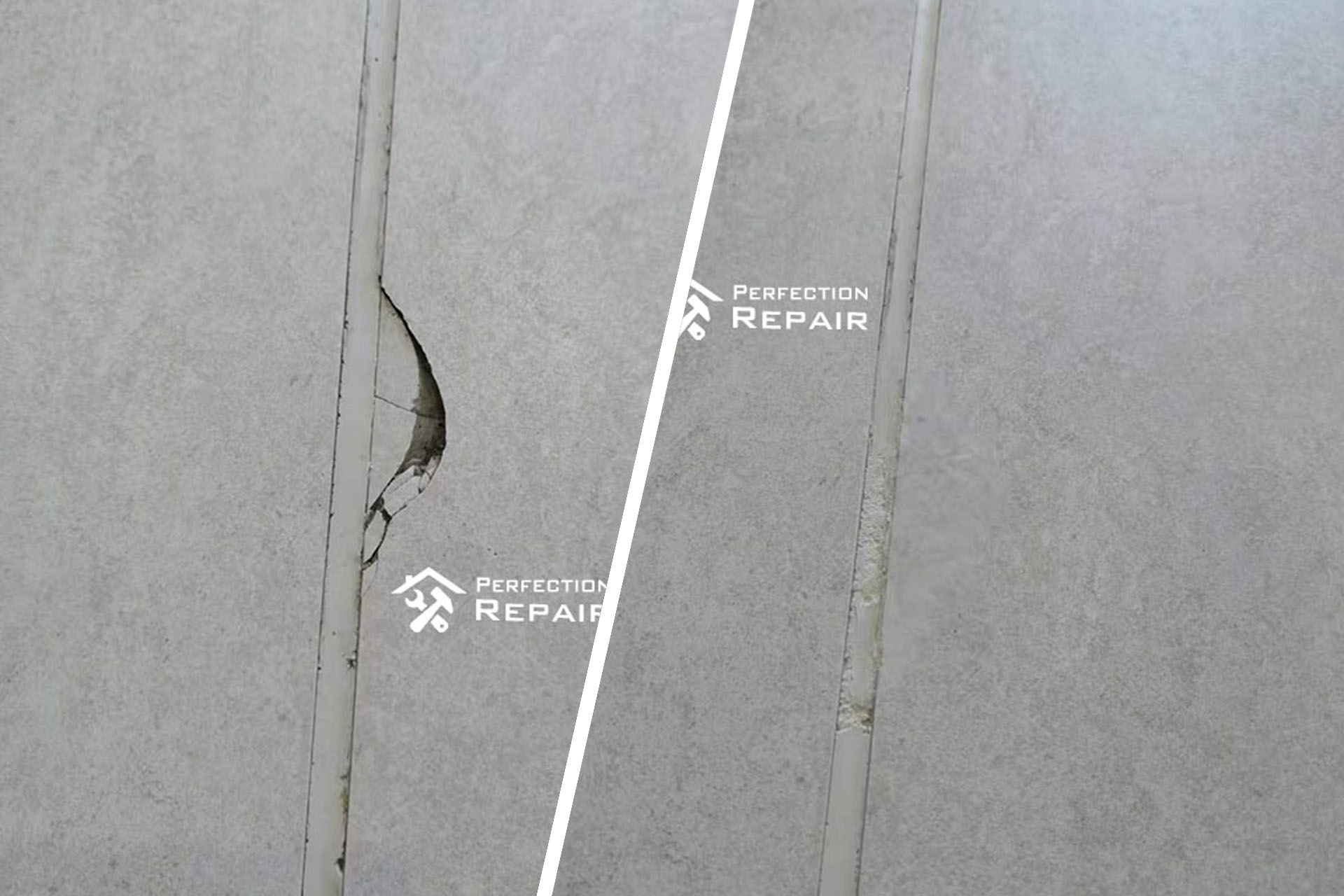
One Haymarket rental had a single impact-fractured floor tile. The matching batch was discontinued, while the surrounding tiles, grout and substrate remained stable. Replacing a section would have expanded the work well beyond the damaged area.
We cleared the loose material, rebuilt the fracture with layered polymer resin, matched the aged tile colour on site and refined the surface to the existing low-sheen glaze. The project record documents three hours on site, zero tiles replaced and no disturbed grout lines. The important evidence is not simply that the mark disappeared; it is that the substrate assessment supported a local repair. Read the full Haymarket tile restoration case study.
Material Matching: The Replacement Problem
Natural stone is a quarried material. Marble, travertine, and granite slabs vary between quarry batches — the veining, colour saturation, and background tone of stone from the same quarry can look noticeably different depending on when it was cut.
If your property has a Calacatta marble floor installed fifteen years ago, finding an exact match today is unlikely. The quarry may have shifted to a different section, the batch characteristics will have changed, or the specific product may no longer be available. New tiles installed alongside original tiles will read as different even if they are nominally the same specification.
Restoration works with the existing material. The grinding process removes surface damage and re-polishes the stone that is already there. The result is consistent across the entire floor because it is the same stone throughout.
The matching problem is less significant for engineered stone or standardised tiles that are still in production. For natural stone in premium or heritage properties, it is often the deciding factor.
The Finish Question
There is one area where restoration can produce a result that original installation cannot: surface flatness.
When stone tiles are installed, slight height variations between adjacent tiles — called lippage — are common. These variations create a slightly uneven surface that catches light inconsistently and can be felt underfoot on larger format tiles.
The grinding stage of a restoration process removes lippage by abrading the surface down to a consistent plane across all tiles. The result is a flat, continuous surface without the tile-to-tile variation of the original installation. For large format marble floors in high-end properties, this can produce a finish that is visually and tactilely superior to what was there when the floor was new.
Sustainability
Quarrying new stone, processing it, and transporting it internationally generates significant carbon. Disposing of the existing floor in landfill adds to that footprint.
Restoration uses the stone already in place. The process uses water, diamond abrasives, and polishing compounds — the material inputs are small relative to the embodied carbon already present in the existing stone. For properties with sustainability reporting requirements or ESG commitments, restoration is the measurably lower-impact option.
When Replacement Is the Right Answer
Restoration is not always the correct choice. The situations where replacement makes more practical sense:
Structural damage throughout the floor. Deep cracks that run through the full thickness of the tile, widespread delamination where tiles have lifted from the substrate, or large areas of spalling indicate the stone itself has failed rather than just the surface. Polishing a structurally compromised floor produces a result that will not last.
The stone is too thin to regrind. Each restoration removes a small amount of material. Stone that has been restored multiple times, or tiles that were thin to begin with, may not have enough depth remaining for another grinding cycle.
The design brief requires something different. If a renovation is changing the layout, the colour palette, or the material specification entirely, restoration of the existing stone is not relevant to the project outcome.
The stone is a budget product in poor condition. Restoration is most cost-effective on quality stone worth preserving. Cheap tiles in poor condition may not justify the restoration cost if the result will be marginal.
For everything else — dull finishes, etching from acidic spills, surface scratches, uneven polish, or grout discolouration — restoration is typically the faster, cheaper, and lower-disruption option.
If you have a stone floor in Sydney that needs assessment, our team can advise on whether restoration is viable and what the result would look like. Contact us for an on-site evaluation, or see our stone repair and restoration services for more detail on what the process involves.