

When a benchtop chips, a floor tile fractures or a timber coating is damaged, replacement is no longer the automatic answer. For a property manager, the useful question is narrower: is the damage localised, is the substrate sound, and can the existing finish be matched reliably?
That decision affects more than the repair invoice. It determines access time, resident disruption, waste removal, matching risk and how clearly the work can be documented for an owner or strata committee. This guide explains how we assess those trade-offs on Sydney properties and where restoration should—and should not—be considered.
Start With the Substrate, Not the Visible Mark
Two defects that look similar can require completely different responses. A chip confined to the face of a ceramic tile can often be stabilised, rebuilt and colour-matched. A crack caused by movement in the slab beneath it will return unless the underlying movement is addressed. A cloudy patch in a timber floor coating may be suitable for a localised strip and recoat; swollen boards caused by ongoing moisture are not.
Before recommending restoration, we check:
- whether the substrate is stable;
- whether moisture, movement or delamination is active;
- how deep the damage extends;
- whether the surrounding material is still serviceable;
- whether colour, grain, texture and sheen can be matched on site; and
- whether the repaired area will tolerate normal use.
If those checks fail, replacement or a broader remedial scope is the honest recommendation. Our building maintenance service for Sydney strata and property managers is structured around this assessment-first approach.
Why Matching Often Decides the Scope
Replacement sounds straightforward until the original product is discontinued or has aged in place. Tile batches vary. Timber changes colour under UV exposure. Existing coatings lose gloss. A new component with the same catalogue name can still look different beside material installed years earlier.
Localised restoration uses the installed surface as the reference. Pigments are blended against its current colour, grain is continued through the repair, and the final coating is adjusted to the surrounding sheen. The objective is not to make the damaged component look factory-new while everything around it remains aged; it is to make the repaired area belong to the surface that is already there.
This is particularly useful in common areas, furnished rentals and occupied commercial spaces where expanding the scope can create access, noise and scheduling problems.
Three Sydney Projects That Show the Difference
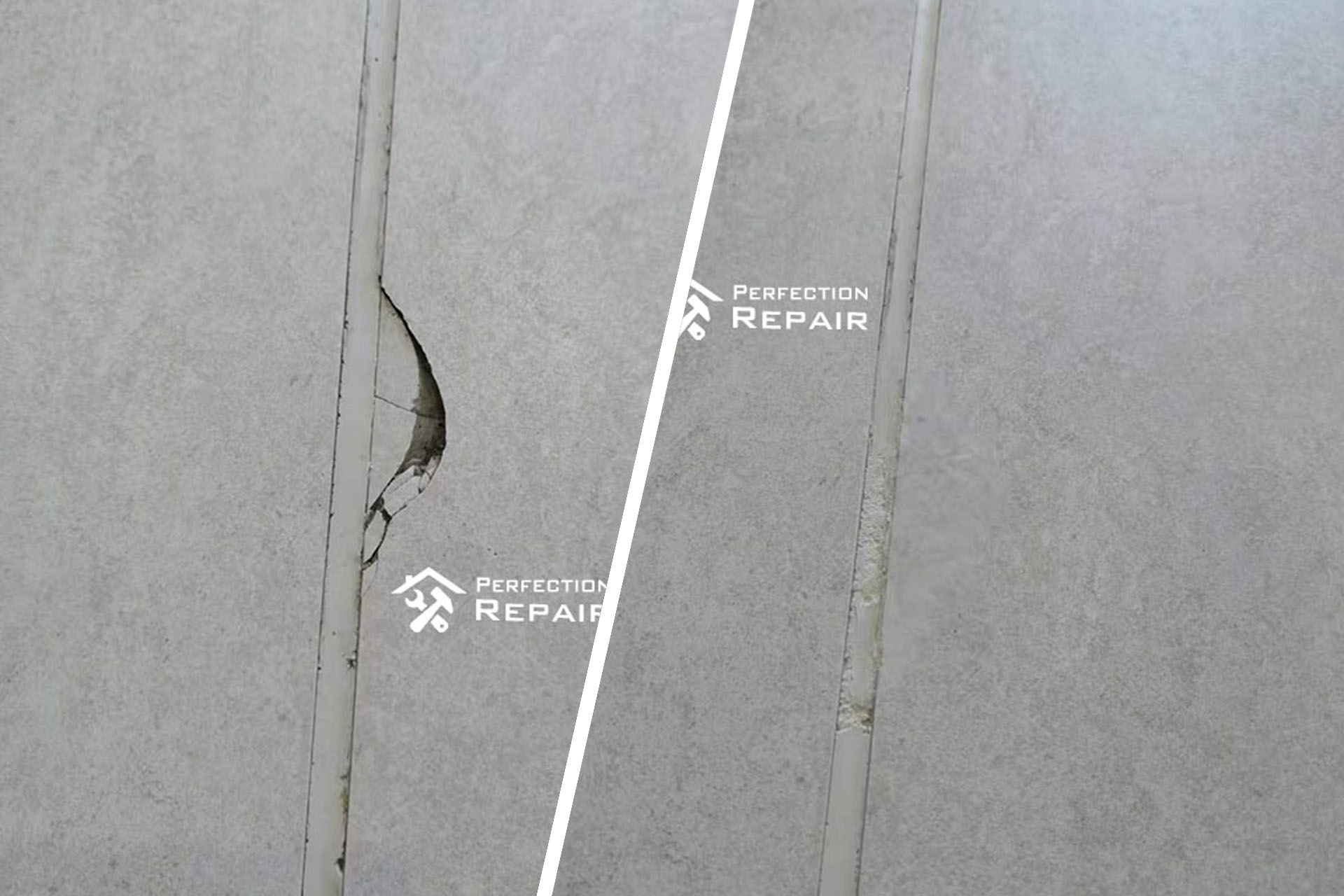
A discontinued floor tile in Haymarket
A rental property had one impact-fractured ceramic tile while the surrounding tiles and grout remained stable. The matching batch was no longer available. Instead of lifting a section of floor, we cleared the loose material, rebuilt the fracture with a layered polymer resin and matched the aged colour and low-sheen glaze on site. The work took three hours and disturbed no grout lines. See the Haymarket tile repair case study.
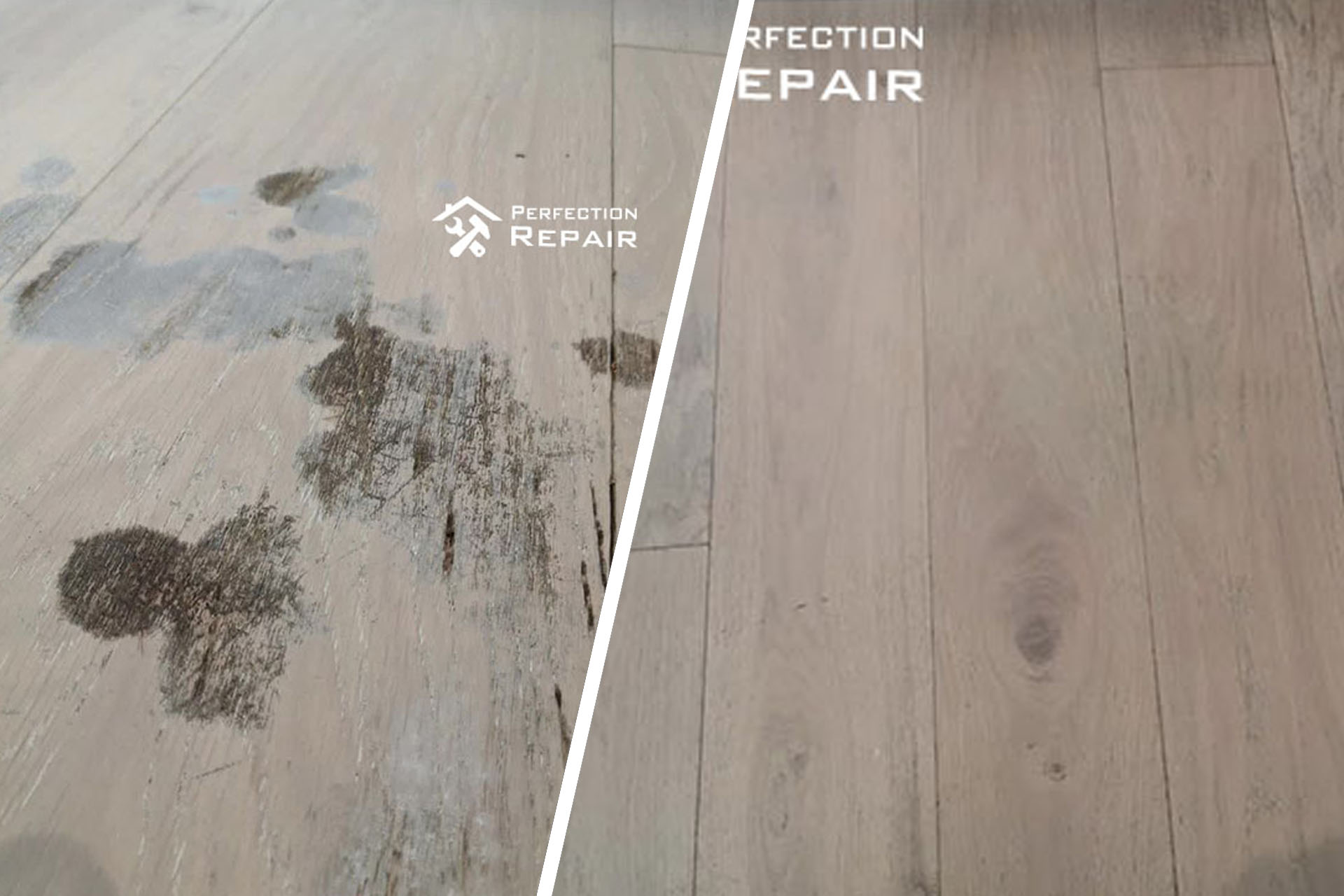
Finish damage across three timber boards in Rhodes
A cleaning chemical had clouded the lacquer across three boards, but the timber itself remained sound. That diagnosis avoided full-floor sanding. The affected coating was removed locally and replaced with a custom-matched semi-gloss finish. The documented on-site time was four hours, with no boards replaced. See the Rhodes timber floor restoration case study.
A laminate benchtop chip
Benchtop replacement can involve removal of sinks, taps and adjacent finishes even when the damage is confined to one edge or impact point. Where the substrate remains stable, a local rebuild and colour match can keep the repair proportional to the defect. Our benchtop repair service explains the materials and limits in more detail.
These examples are not a promise that every defect can be repaired. They show why a surface-level diagnosis can prevent an unnecessarily large replacement scope.
Restoration and Replacement: What Property Managers Should Compare
| Decision factor | Localised restoration | Replacement |
|---|---|---|
| Scope | Confined to the damaged area | Removes and reinstalls a component or section |
| Matching | Blended to the aged surface on site | Depends on obtaining a compatible new product |
| Access | Often completed in one visit | May require several trades and return visits |
| Waste | Damaged area is rebuilt in place | Existing material, packaging and offcuts require disposal |
| Best suited to | Stable substrate and localised cosmetic damage | Active movement, structural failure or widespread damage |
Quotes should be compared on total scope, not just the technician’s time. Replacement may require demolition, disposal, material ordering, plumbing disconnection, repainting or temporary closure. Restoration requires specialised labour and careful matching, but usually avoids those surrounding tasks.
When Restoration Is the Wrong Recommendation
Property managers should be cautious of anyone promising an invisible repair without inspecting the cause. Restoration is usually unsuitable when:
- tiles or stone are moving because the substrate has failed;
- moisture continues to enter timber, walls or joinery;
- a crack passes through a structural component;
- a large area has delaminated or degraded;
- the remaining material cannot support a durable bond; or
- the renovation brief intentionally changes the material or design.
In those cases, a cosmetic repair can conceal evidence without resolving the defect. We would rather identify that limitation before quoting than produce a finish that fails later.
Documentation to Request for Strata and Commercial Work
A completed repair should be easy to explain to an owner, committee or facilities team. For managed properties, request:
- photographs showing the original damage;
- a written description of the substrate assessment;
- the proposed repair boundary and materials;
- before-and-after photographs from the same viewing angle;
- any access, curing or maintenance restrictions; and
- a clear tax invoice linked to the work order.
This record helps distinguish a controlled restoration from an undocumented patch and gives the next contractor useful context if the area is inspected again.
A Better First Question
The choice is not “repair everything” or “replace everything.” It is whether the existing material is fundamentally sound and whether a local repair can meet the required visual and service standard.
Send clear photos from normal viewing distance and close range, plus a photo showing the whole component or room. We can usually identify whether an on-site assessment is worthwhile before anyone commits to a larger scope. To discuss a damaged surface, request an assessment or review our surface repair services.